

- AI has collapsed the traditional video production pipeline — teams can now go from prompt to publish-ready video without coordinating writers, editors, directors, or voiceover artists across separate tools.
- The bottleneck has flipped: many creative teams now move faster than their clients can review, a complete reversal from traditional timelines where production was always the slowest step.
- AI automates the lowest-value production tasks — scripting, formatting, audio sync, localization — freeing 75% of staff effort for strategy, testing, and creative direction.
Content teams have a volume problem. Audiences expect video on every platform, in every format, updated constantly — and the traditional production pipeline simply wasn't built for that reality. The teams still running it are feeling the gap.
AI didn't just speed up production. It removed the production layer entirely.
.png)
What AI Video Creation Means for Modern Content Teams
For most teams, the bottleneck was never ideas. It was execution. Getting from a concept to a finished, publish-ready video required coordinating writers, directors, editors, motion designers, and voiceover artists — often across multiple tools and handoffs.
Each step added time. Each handoff added risk.
AI has collapsed that pipeline. Teams can now move from text prompt to generated video, refine it, add audio, and export — all without leaving a single workspace.
The result isn't just faster production. It's a fundamentally different way of working: one where iteration is cheap, creative risk is low, and volume is no longer constrained by headcount.
The bottleneck has shifted from production capacity to approval speed.
Many creative teams now move faster than their clients can review and make decisions — a complete reversal from traditional timelines where client feedback waited on slow production processes. When iteration is free, creativity compounds.
Teams that once had to choose one creative direction now explore ten — and make decisions based on what's actually been executed, not what looked good on a brief.
Which Parts of Video Creation AI Can Automate
AI doesn't replace every part of video production — but it removes the parts that consumed the most time for the least creative value.
Pre-production and scripting. AI-powered scripting tools shorten pre-production times by around 53%.
What used to require a dedicated copywriter, a brief review cycle, and multiple rounds of revisions can now be drafted, iterated, and finalized in a fraction of the time.
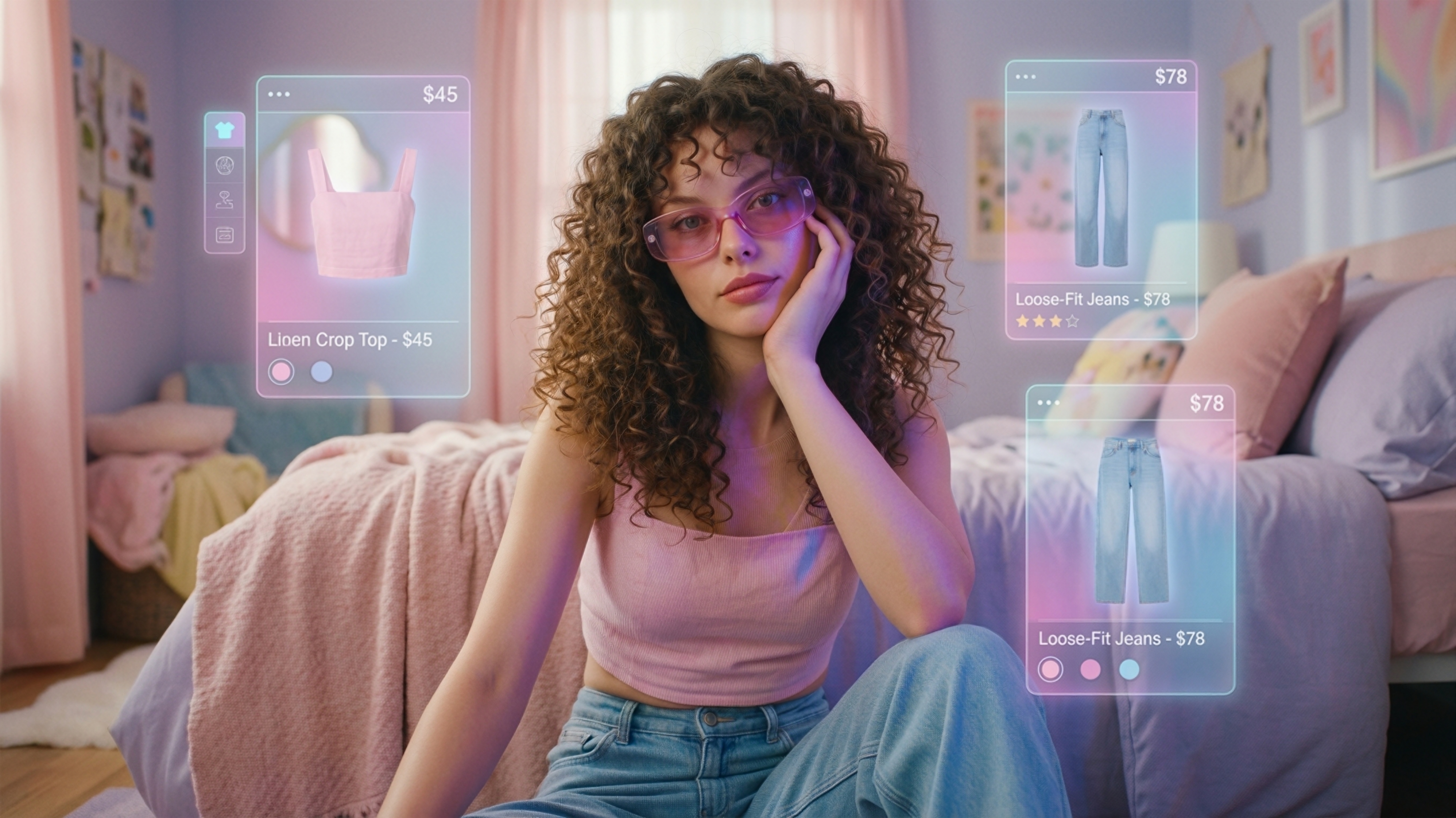
Generation. Text-to-video and image-to-video generation are now the core of AI-accelerated workflows. Teams input a prompt, a reference image, or an existing asset and receive generated video within minutes.
What took a full shoot day — booking talent, location, equipment, crew — can now be explored generatively before a single camera rolls, or skipped entirely if the AI output meets the brief.
Editing and formatting. Once footage exists, AI handles the tasks that used to consume editor hours: trimming, color grading, captioning, background removal, and format adaptation for different platforms.
Rather than exporting the same video in six different aspect ratios manually, AI tools reformat automatically — vertical for Reels, landscape for YouTube, square for feed posts.
Audio. AI voiceover generation, automatic lip-sync, and Audio-to-Video workflows eliminate the need for separate recording sessions and post-production audio work. Drop in a script or an audio track, and the video syncs to match.
Localization. Multi-language dubbing, captioning, and video versioning — tasks that once required separate production runs per market — can now be handled within the same platform at a fraction of the cost and timeline.
Benefits of Using AI to Speed Up Content Creation
Speed is the headline, but it's not the only benefit. What happens when production timelines compress changes how creative teams operate at every level.
More output, same team. Teams using AI video tools consistently report producing significantly more content without increasing headcount.
For solo creators and small teams, AI levels the playing field — the same quality and volume that once required a full production department is now accessible from a single platform.
Lower cost per asset. Production costs drop substantially when shoots, crews, and lengthy post-production cycles are replaced with AI-generated workflows.
For teams managing large content budgets, that's not just a saving — it's budget that can be reallocated toward strategy, distribution, and testing.
Faster iteration and creative testing. One of the most underrated gains from AI content creation is the ability to test more. Instead of committing a full production budget to one creative direction, teams can generate, test, and optimize — then scale what works.
The cost and time of producing variations drops dramatically.
More time on strategy. In organizations using AI-driven content operations, 75% of staff effort has shifted from production tasks to strategic work. Marketers spend less time executing and more time on the decisions that actually move campaigns forward.
Consistency at scale. Maintaining visual and brand consistency across a high volume of content is one of the hardest challenges for growing teams.
AI tools that support reusable assets, saved styles, and character consistency solve this without slowing production down.
AI Videos vs. Traditional Video Production Timelines
The timeline difference between traditional and AI-assisted video production isn't marginal — it's the difference between operating reactively and operating proactively.
Timeline estimates reflect general industry ranges for a standard 60-second marketing video.
For campaigns, the advantage compounds. Where traditional production might allow for one or two creative executions per campaign, AI enables teams to develop and test multiple variations — different talent, different messaging angles, different visual styles — and optimize in real time based on what actually performs.
Conclusion
The speed gains from AI video creation aren't a shortcut. They're a structural advantage that changes what content teams can do — not just how fast they can do it. Faster production means more testing. More testing means better creative decisions. Better creative decisions mean stronger campaign performance.
For teams still running traditional production pipelines alongside growing content demands, the question isn't whether AI will change how you work. It's whether you'll build the workflow before or after your competitors do.
LTX Studio is built for exactly this shift — not just to generate content faster, but to remove the friction layers that slow teams down in the first place. From AI video and image generation to storyboarding, motion control, and audio-driven generation, everything lives in one workspace.
No handoffs. No tool-switching. No production layer sitting between your idea and your output.
The teams winning on content in 2026 aren't the ones with the biggest budgets. They're the ones who rebuilt their workflows first.


Maximize your creative potential with AI-powered tools
Maximize your creative potential with AI-powered tools







.png)